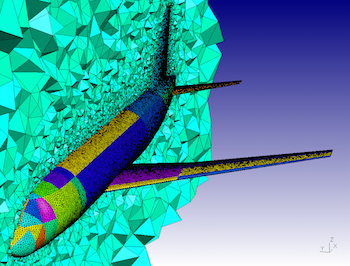
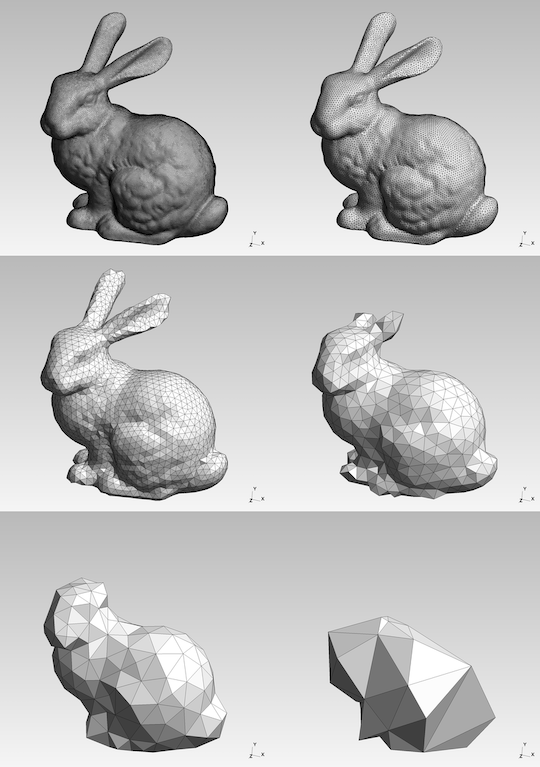
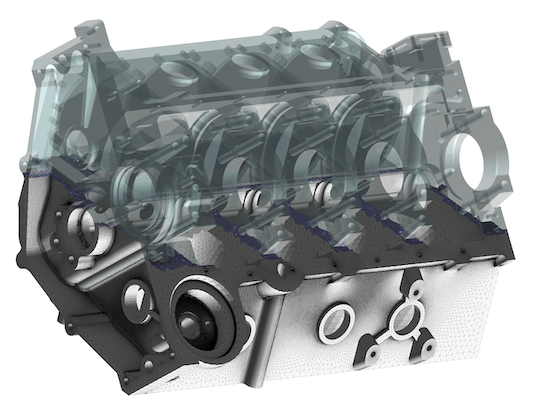
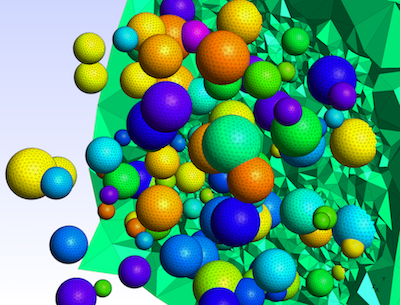
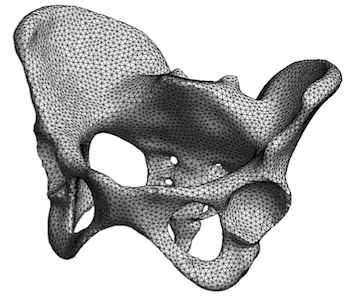
Gmsh is an open source 3D finite element mesh generator with a built-in CAD
engine and post-processor. Its design goal is to provide a fast, light and
user-friendly meshing tool with parametric input and flexible visualization
capabilities. Gmsh is built
around four modules
(geometry, mesh, solver and post-processing), which can be controlled with
the graphical user
interface, from
the command
line, using text files written in Gmsh's
own scripting
language (.geo files), or through the C++, C, Python, Julia and
Fortran application
programming interface.
See this general presentation for a high-level overview of Gmsh and the reference manual for the complete documentation, which includes the Gmsh tutorial. The source code repository contains the tutorial source files as well as many other examples.
Gmsh is distributed under the terms of the GNU General Public License (GPL):
pip install
            --upgrade gmsh
'
Make sure to read the tutorial and the FAQ before sending questions or bug reports.
git clone
          https://gitlab.onelab.info/gmsh/gmsh.git
'
pip install -i https://gmsh.info/python-packages-dev
        --force-reinstall --no-cache-dir gmsh
' (on Linux systems without
X windows, use python-packages-dev-nox instead of
python-packages-dev)
If you use Gmsh please cite the following reference in your work (books, articles, reports, etc.): C. Geuzaine and J.-F. Remacle. Gmsh: a three-dimensional finite element mesh generator with built-in pre- and post-processing facilities. International Journal for Numerical Methods in Engineering 79(11), pp. 1309-1331, 2009. You can also cite additional references for specific features and algorithms.
Please report all issues
on https://gitlab.onelab.info/gmsh/gmsh/issues.
Gmsh is copyright (C) 1997-2022 by C. Geuzaine and J.-F. Remacle (see the CREDITS file for more information) and is distributed under the terms of the GNU General Public License (GPL) (version 2 or later, with an exception to allow for easier linking with external libraries).
In short, this means that everyone is free to use Gmsh and to redistribute it on a free basis. Gmsh is not in the public domain; it is copyrighted and there are restrictions on its distribution (see the license and the related frequently asked questions). For example, you cannot integrate this version of Gmsh (in full or in parts) in any closed-source software you plan to distribute (commercially or not). If you want to integrate parts of Gmsh into a closed-source software, or want to sell a modified closed-source version of Gmsh, you will need to obtain a commercial license: please contact us for details.
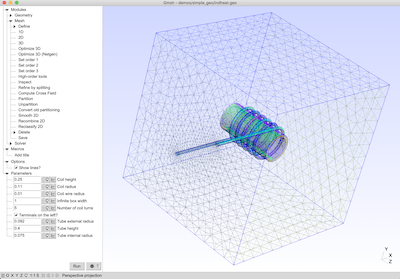
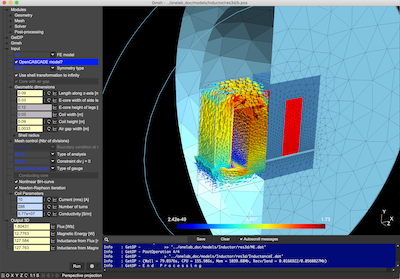
These are two screenshots of the Gmsh user interface, with either the light or dark user interface theme. See the ONELAB web site for more.
If this phrase was once so prevalent, why is it now so obscure?
The primary reason is that the technological necessity vanished. Modern consoles and smartphones support full Arabic keyboards. A Saudi gamer today can type "حكم" correctly without resorting to "7akom." As technology caught up with the users, the "Arabizi" dialect became less of a requirement and more of a stylistic choice, often looked down upon as "old school" or uneducated.
Furthermore, the gaming culture itself shifted. The toxic, hyper-competitive "quickscope" culture of the Xbox 360 era gave way to the more curated, squad-based communication of games like Fortnite or Apex Legends. The specific brand of trash-talk embodied by "ittz 7aacom cod" faded into history, replaced by newer memes and slang. ittz 7aacom cod
To understand the phrase, we must first break down its anatomy. The phrase is not a sentence; it is a phonetic transliteration of Arabic, filtered through the constraints of Western technology.
The core of the phrase is "7aacom" (often spelled 7akom or hakom). In "Arabizi" or the Arabic Chat Alphabet—a system developed in the late 1990s and early 2000s to allow Arabic speakers to communicate using Latin characters—the number 7 is used to represent the Arabic letter Ha (ح), which has a sound that does not exist in English. Consequently, "7aacom" translates roughly to "your judgement" or "your opinion," though in the context of gaming, it was often used to imply ownership or domination—essentially, "I ruled you" or "I own you." If this phrase was once so prevalent, why
The prefix "ittz" is a staple of "Leet Speak" (1337), an alternative alphabet used by the early internet underground. It is simply a stylized, "cool" way of writing "it's" or "its."
When combined, "ittz 7aacom cod" roughly translates to "It’s your judgment/rule, COD" or, more loosely in gaming parlance, "Call of Duty domination." A Saudi gamer today can type "حكم" correctly
Ittz 7aacom Cod stands for taking fragments and forging identity. It’s the remix of language and persona: a micro-rebellion against bland naming, a wink to those who read between lines. Wear it like static energy — disruptive, playful, unmistakable.
Before you try to find a working link for "ittz 7aacom cod," you must understand the cybersecurity risks. In 2025, malicious actors dominate the cheat market.